Good Morrow,
Halloween is nigh approaching, which means it’s time to decorate our respective domiciles. There are many different directions one could go with this, but today we will discuss how to make our spooky decorations medieval-themed.
Artwork
Throughout history, people have expressed their fears, needs, and deepest desires through art. And what could be scarier than human longing? To pay homage to that, all art featured in this post is sourced from The Met’s Public Domain art. This art can be freely copied, modified, distributed, or used for commercial purposes.
Printing out this artwork is a great way to decorate, especially if you have wall space that needs to be filled. You can print it with a regular printer, but if you would like it bigger than an 8 ½ by 11 inch or with great quality, I would suggest getting it printed at a professional shop somewhere like Staples.
Bones
Skulls:
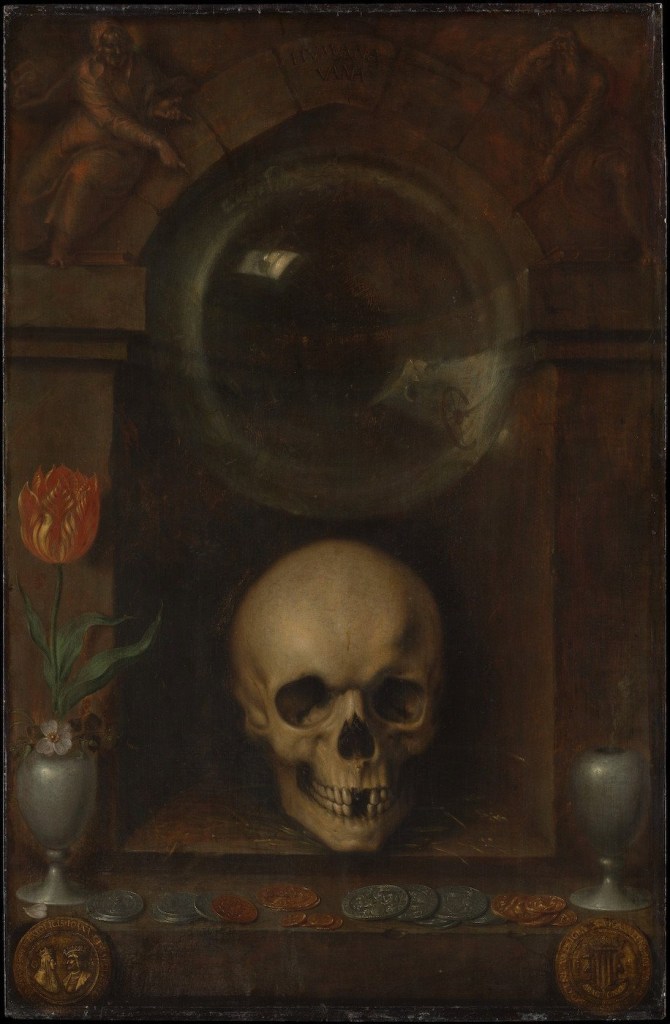
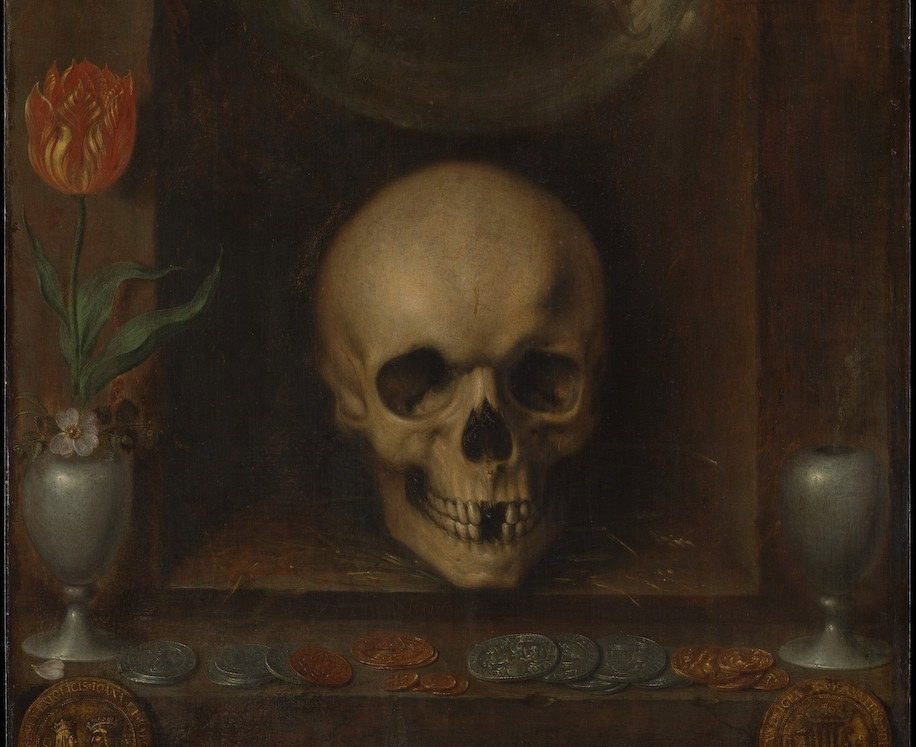
Skulls appear in art throughout history and possess great meaning. The above painting by Jacques de Gheyn II in 1603 is a Vanitas still life and is one of the earliest known still lifes. A Vanitas painting is a still life that contains an object that represents human vanity. What’s a better way to celebrate than with decor that shows the juxtaposition of the vanity of humans and our short lives, which always come to an end?
Bones:
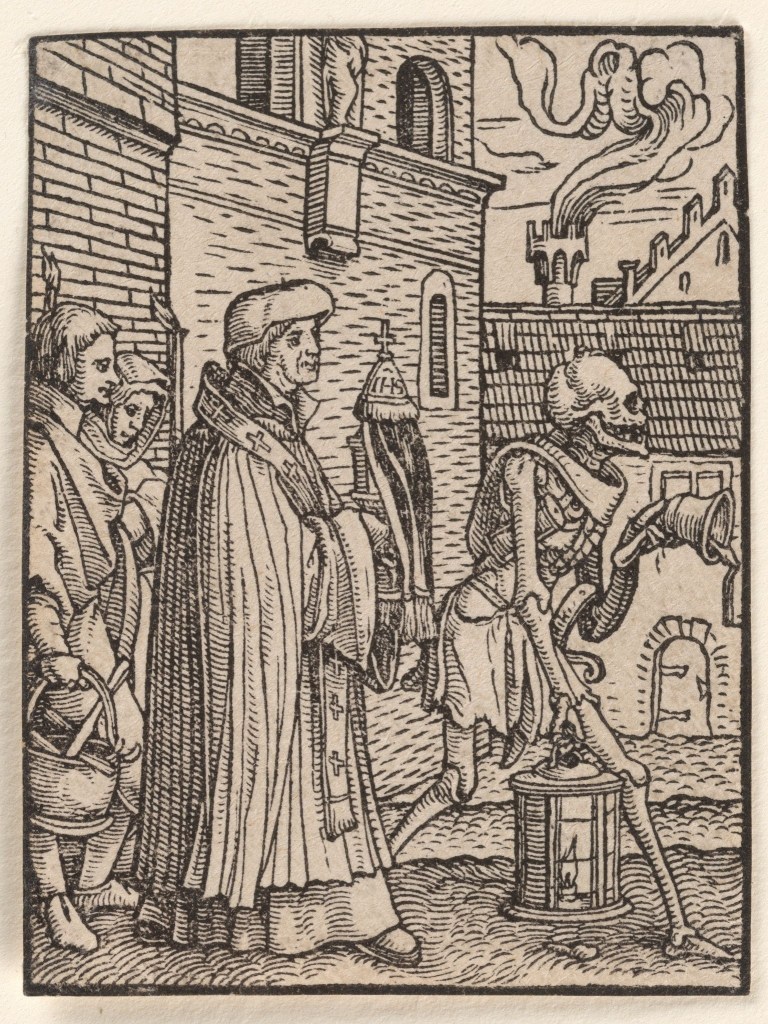
Death was a common part of medieval life, so it makes sense that bones feature heavily in art. The above woodcut by Hans Lützelburger, made in 1526, titled “The Priest, from ‘The Dance of Death’” gives elite Halloween vibes. You can draw inspiration from this by decorating with bones.
Another source of bone inspiration can be drawn from the Sedlec Ossuary in the Czech Republic. It is a small Roman Catholic Chapel decorated with human skeletons from 40,000 people. In 1278, an abbot from Sedlec made a pilgrimage to Jerusalem and brought back soil from the crucifixion site and spread the dirt on the cemetery across from the local church. After that, it became a popular place to be buried. But with the spread of the black plague in the 14th century and the Hussite Wars in the 15th century, the cemetery was over capacity, and the bones were exhumed and stacked in pyramids in a new ossuary. Then in 1870, a woodcarver was hired to arrange the bones in artistic and beautiful ways in the chapel.
To draw inspiration from this, one might purchase fake bones and arrange them in artistic shapes. They can also line the ceiling or be made into a hanging piece like a chandelier. It is a great way to increase the vibes while remembering there’s beauty in death.
Rats
Rat Catcher:
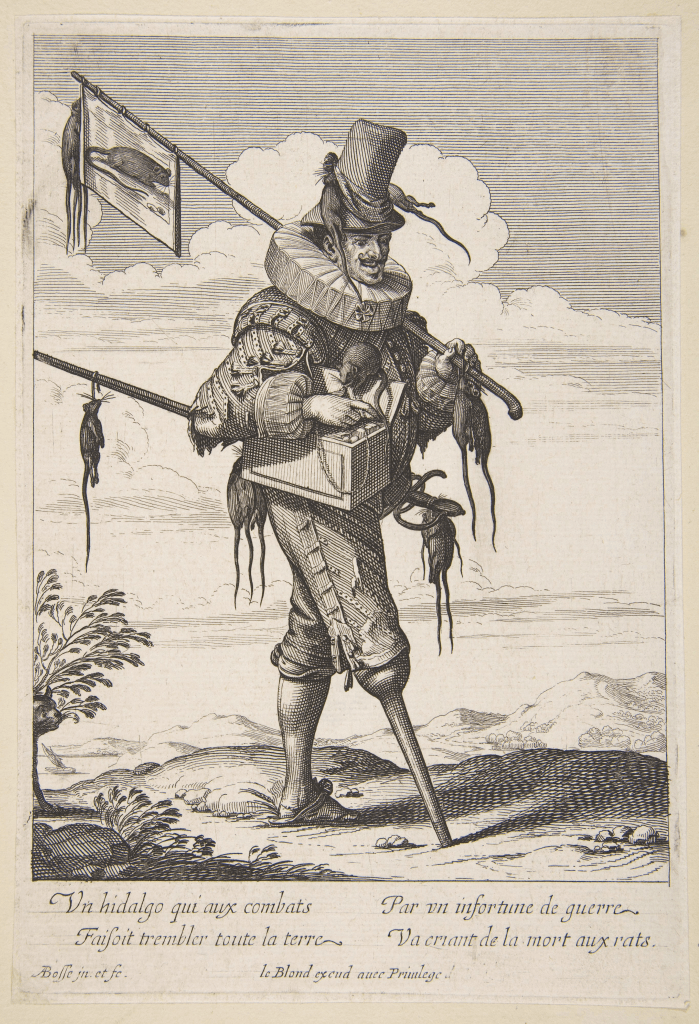
Medieval Europe, much like New York, was overrun with rats, which led them to have Rat Catcher’s, just like we today have exterminators or bodega cats. The above etching by Abraham Bosse, made from 1632-1633, depicts these necessary laborers.
Right now, plague rats are a very popular costume, but if you’d like to put a spin on it, you could go as a rat catcher or, for a couples costume, a rat catcher and a rat. Additionally, one could place stuffed rats in cages as decorations to pay homage to this important work in their decor.
Plague Rats:
Unlike today, rats were not thought of as gourmet French chefs, but instead as disease carriers. These little creatures transported fleas which themselves carried the plague. This has made them one of the most iconic representations of the Black Death.
Rats can be used in a variety of decor styles. If you are hosting a party, you might consider making cookies in the shape of rats, covering them in gray frosting and topping them with black sprinkles to denote the fleas. You can also have fake rats hidden behind furniture or peeking out of shelves to give your guests a fright.
Weaponry
There is nothing quite so intimidating and awe-inspiring as weaponry hanging from a well. It gives a sense of importance and danger to the house, like at any moment a conflict might break out. This can be anything from swords and daggers to crossbows, maces, and spears. I would recommend this be a statement piece; it will most likely be on the pricier side of decor, so make sure you really get your money’s worth. Ideally, the weaponry would be hung above a mantel, but if you do not possess a mantel, any prominent wall will do. You can also use it as a prop for something else. If you have a skeleton or ghost, giving them a weapon is a great way to get your guests questioning if the dead are really gone or if they can still touch us.
However you decide to decorate, including history is a great way to add gravitas. You are not only using the fears and worries of the masses today, but of the masses of history. Humans are not as complicated as we like to picture ourselves and are all connected through our shared fears: death, disease, and war. Halloween is a great time to reflect on this, and on how we can hopefully one day not need to be so afraid of them.

